Rain can change the mood of a beautiful day within seconds. For a luxury handbag, however, a sudden shower can leave more than an unpleasant memory. Water may darken untreated leather, loosen dyes, stain suede, or damage delicate hardware. The right preparation matters, especially when the bag carries sentimental or financial value. This guide explains how to protect a luxury handbag from rain through practical, careful habits that suit different materials and situations.
David Mesquita, vice president of Leather Spa and a respected luxury handbag restoration specialist, advises, “The best thing you can do is protect your bag before it gets wet.” His point is simple but easy to ignore. A quality water-repellent treatment, a protective dust bag, and a lightweight handbag cover can reduce unnecessary exposure. Still, no product creates complete protection. Overusing sprays may alter texture or color, particularly on exotic finishes, soft calfskin, or untreated suede.
The following seven tips focus on realistic protection before, during, and after rainfall. They cover checking the weather, choosing safe storage, avoiding crowded umbrellas, and responding quickly to moisture. Patience helps. Rubbing a wet surface can spread marks and push water deeper into the leather. Air-drying is usually safer than using a hair dryer, radiator, or direct sunlight. Some advice may feel overly cautious, and I admit I once carried a pale leather bag during light drizzle without checking its care label. That mistake was avoidable. Material, construction, and manufacturer guidance should always shape the final decision.
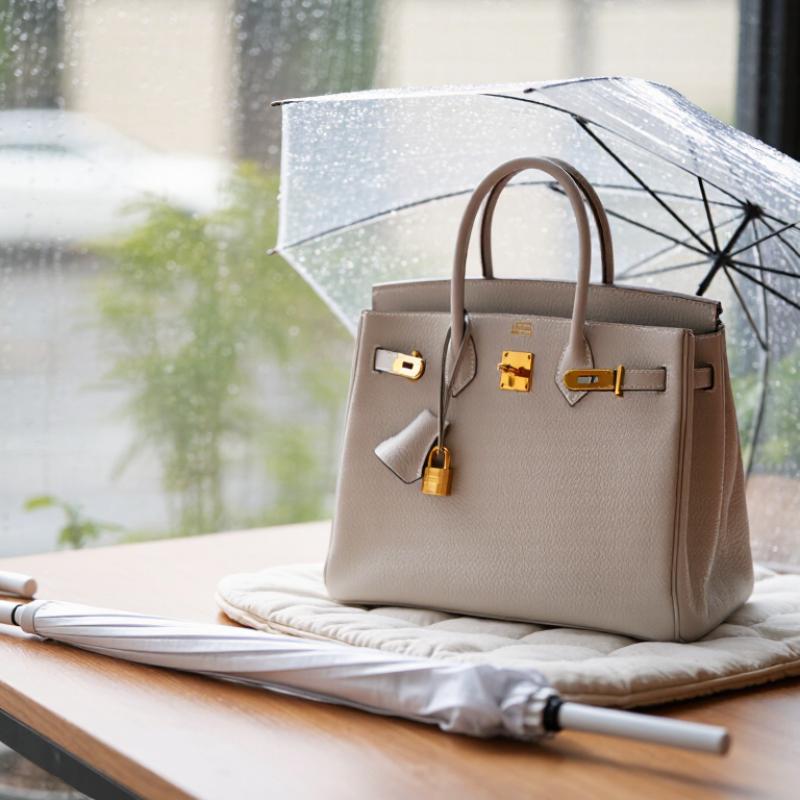
7 Tips on How to Protect a Luxury Handbag from Rain?
Choosing Rain-Ready Materials and Protective Treatments
A rain-ready handbag begins with its material, not a last-minute spray. Smooth, tightly finished leather usually sheds light rain better than unfinished suede. Coated canvas and high-quality synthetic microfiber can also resist surface moisture. However, seams, zippers, and edge paint often remain vulnerable. No material is completely waterproof.
Textile Exchange’s 2024 Materials Market Report estimates global fiber production reached 124 million tonnes in 2023. It may rise to 160 million tonnes by 2030. That growth makes durability and repairability important material choices. A longer-lasting bag can reduce replacement demand, although this benefit depends on proper care and actual use.
Choose a protector specifically tested for the handbag’s material. Avoid household waterproofing products unless their instructions clearly mention leather or fabric compatibility. Apply a thin, even layer outdoors, then test an unseen corner first. I once treated pale leather too quickly and noticed a slight darkening. It was a useful mistake.
Let the bag dry naturally.
Never use direct heat. It can stiffen leather, distort coatings, or loosen adhesives. During travel, place the handbag inside a breathable cotton dust bag, not an airtight plastic sleeve. For heavy rain, use a water-resistant cover with a soft interior. After exposure, blot moisture with a clean cloth and let the bag rest at room temperature. A professional cleaner should assess dye transfer, swelling, or cracked finishes before further treatment.
| Tip | Protection Priority | Rain-Ready Materials | What to Do | Protective Treatment | Important Caution |
|---|---|---|---|---|---|
| 1 | Choose a naturally water-resistant exterior |
Best suited Coated canvas, coated textiles, nylon, and smooth finished leather generally resist light surface moisture better than absorbent suede or untreated leather. |
For frequent wet-weather use, select a structured bag with a closed top, covered seams, and minimal exposed absorbent surfaces. | Use only a treatment specifically labeled as compatible with the material. A coating may improve surface resistance but cannot make a bag fully waterproof. | Water resistance depends on construction as well as material. Open edges, stitching, lining, and hardware can still allow moisture inside. |
| 2 | Apply a material-specific protector before rain |
Suitable options Leather creams or conditioners for finished leather; fabric or textile protectors for compatible canvas and nylon; suede-specific protectors for suede. |
Patch-test the product on a hidden area, apply a light and even layer, and allow the bag to dry completely before use. | A breathable water-repellent spray can help droplets bead on some leather and textiles, reducing immediate absorption. | Avoid using one universal spray on every material. Products containing heavy oils, waxes, or solvents can darken, stiffen, or stain certain surfaces. |
| 3 | Carry a breathable rain cover |
Recommended cover A clean, lightweight, breathable fabric cover or a purpose-designed handbag rain cover. |
Keep the cover folded in a separate pouch and place it over the bag before exposure becomes heavy. Use it to shield the body, handles, and flap. | No chemical treatment is required for the bag when the cover provides the primary barrier. | Do not store a damp bag inside an airtight plastic cover. Trapped moisture can encourage mildew and may affect leather finishes. |
| 4 | React quickly after exposure |
All materials Especially important for suede, nubuck, untreated leather, and absorbent textile surfaces. |
Gently blot droplets with a clean, white, absorbent cloth. Remove wet contents, open the bag, and let air circulate naturally. | After complete drying, use the appropriate conditioner or suede brush only if the material-care instructions permit it. | Do not rub wet stains, use a hair dryer, place the bag on a radiator, or expose it to strong direct heat. Rapid drying can cause leather to warp or crack. |
| 5 | Protect vulnerable openings and contents |
High-risk areas Zippers, magnetic closures, open-top designs, seams, handles, and unsealed interior pockets. |
Keep the bag upright, close all fasteners, and place documents, electronics, and cosmetics in separate waterproof pouches. | Water-repellent treatments may help exposed surfaces, but they do not reliably seal zippers, seams, or openings. | Avoid overfilling the bag. Excess pressure can pull apart closures and distort the shape, making moisture entry more likely. |
| 6 | Keep suede and nubuck away from heavy rain |
Most vulnerable Suede and nubuck have a raised, absorbent surface that can develop dark water spots, tide marks, or texture changes. |
Use these materials only in light, brief precipitation when possible. If rain becomes heavy, place the bag under shelter rather than relying on spray alone. | Apply a suede- or nubuck-specific protector after testing it discreetly. Brush the nap gently once the surface is fully dry. | Do not apply ordinary leather polish, oily conditioner, or aggressive stain remover to suede or nubuck. |
| 7 | Store the bag correctly after wet weather |
Storage essentials Acid-free tissue or a soft, colorfast filler; a breathable dust bag; and a cool, dry storage area. |
Empty the bag, reshape it with loose tissue, wipe hardware carefully, and store it upright or in its intended shape after it is completely dry. | Reapply a compatible protector only according to the product instructions and after the surface has been cleaned and dried. | Avoid humid rooms, sealed plastic bags, colored tissue that may transfer dye, and prolonged contact with damp surfaces. |
Smooth, tightly finished leather usually sheds light rain better than unfinished suede. Coated canvas and synthetic microfiber can also resist surface moisture. No material is completely waterproof.
Not always. Seams, zippers, and painted edges often let moisture enter. Check these areas after walking through wet weather.
Choose one tested for the handbag’s exact material. Avoid household waterproofing products. Test a hidden corner before treating the whole surface.
Stop applying it. Let the area dry naturally and compare the color later. I once treated pale leather too quickly. The slight darkening was a useful warning.
Blot it with a clean, white cloth. Do not rub. Remove the contents and open every pocket. Reshape the bag with acid-free tissue. Keep it in a cool, ventilated room.
No. Direct heat can stiffen leather, distort coatings, loosen adhesives, or shrink the material. Keep it cool. Dry slowly.
Wait until it feels completely dry. Drying may take 24 to 48 hours, depending on humidity and material. Dampness can create odors inside pockets.
Store it upright in a breathable dust bag. Use light tissue under handles and corners. Avoid sealed plastic, damp walls, and crowded wardrobes. A small hygrometer can help monitor room humidity.
Test a compatible conditioner on hidden smooth leather. Suede and unfinished leather usually need specialist care. Dry metal fittings with a soft cloth. If stains remain, stop experimenting and seek qualified professional advice. DIY cleaning can make a small mark permanent.
Learning how to protect a luxury handbag from rain begins with choosing suitable materials and applying a product designed for the bag’s specific leather or fabric. Before leaving home, check the weather, remove unnecessary items, close all compartments, and carry a compact waterproof cover or umbrella. In wet conditions, keep the handbag elevated from puddles and avoid placing it on damp surfaces. Hold it securely under shelter whenever possible, while allowing enough space to prevent rubbing against wet clothing or rough materials.
If the handbag becomes wet, gently blot the moisture with a clean, soft, absorbent cloth instead of rubbing it. Let the bag air-dry naturally at room temperature, away from direct sunlight, heaters, and hairdryers. Once completely dry, use an appropriate conditioner only if the material permits it. Finally, store the handbag in a breathable dust bag, maintain its shape with clean stuffing, and keep it in a cool, dry place. Regular inspections and careful maintenance can help prevent stains, odors, warping, and long-term moisture damage.

 Ripped Fashion