A commuter backpack is no longer just a container for a laptop. It is a compact survival system for crowded trains, delayed buses, wet pavements, and long walks between meetings. The American Public Transportation Association’s 2024 Public Transportation Fact Book reports 9.9 billion public transportation trips in the United States during 2023. Meanwhile, INRIX’s 2023 Global Traffic Scorecard found that American drivers lost an average of 42 hours in traffic. Commuting remains physically demanding.
So, what essentials should stay in your commuter backpack? The answer should begin with daily reality, not attractive packing lists. A protected laptop sleeve, compact charger, reusable water bottle, transit card, and small first-aid kit usually deserve priority. Add a lightweight rain shell for sudden weather. Keep cables organized. A leaking bottle can ruin an otherwise careful system.
Weight matters more than many commuters expect. Dr. Mary Ann Wilmarth, a physical therapist and former American Physical Therapy Association spokesperson, has said, “Backpacks should weigh no more than 10 percent of a person’s body weight.” Her guidance supports a practical test: if the shoulder straps dig into your neck, remove something. Comfort is evidence.
The ideal setup is personal. It may change weekly. A cyclist needs lights and reflective gear; an office worker may need a compact lunch container. Some lists recommend too much. That is the problem. Essentials should support movement, work, safety, and recovery without turning the backpack into a portable drawer. A thoughtful commuter pack stays ready, but never overloaded.
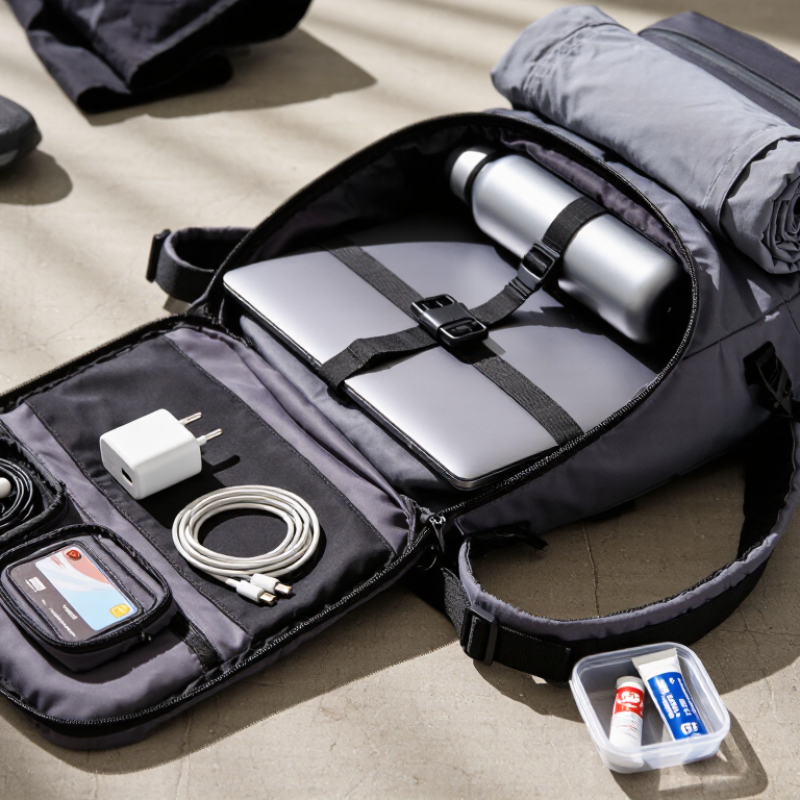
A commuter backpack is not merely storage. It is a small system for managing time, fatigue, weather, and access. The U.S. Census Bureau’s 2022 American Community Survey recorded an average one-way commute of 26.4 minutes. That interval can stretch quickly. A transit card, charged phone, compact charger, water bottle, and identification reduce small delays. Each item has a job. Keep frequently used items near the top. This matters on crowded platforms. My own packing is not perfectly disciplined. I sometimes carry too much “just in case” gear. That habit adds weight without adding much resilience.
Ergonomics should guide the bag’s contents. A laptop belongs close to the back, with heavier items centered. Adjustable straps help, but fit still depends on the wearer. The National Institute for Occupational Safety and Health emphasizes reducing awkward postures and excessive force during work tasks. A commuter can apply that principle daily. Weather protection is equally practical: a simple shell, sealed pouch, and spare socks protect comfort and electronics. For people walking or cycling, visibility deserves attention. The World Health Organization’s Global Status Report on Road Safety 2023 estimates 1.19 million annual road deaths worldwide. A reflective detail and reliable light can improve recognition, though neither replaces careful road awareness. Essentials are therefore personal and evidence-informed, not universal. A minimalist load may suit a short train ride. A longer route needs more contingency. I still remove items weekly. Some were never useful.
A commuter backpack should support safety, comfort, and daily efficiency, not simply hold more items. The U.S. Census Bureau’s 2023 American Community Survey reported an average one-way commute of about 26 minutes. That is enough time for rain, low visibility, or a dead phone to create real inconvenience.
Pack a compact first-aid kit, a small flashlight, reflective detail, and a fully charged power bank. Keep water in a sealed bottle and use separate pouches for cables, keys, and medication. A waterproof laptop sleeve protects work during sudden rain. My weak point is overpacking. I still carry “just in case” items that rarely leave the bag.
Tips: Keep the heaviest objects close to your back. The American Academy of Pediatrics suggests limiting backpacks to 10–15% of body weight, although this guidance targets children. Treat it as a warning, not a universal adult rule. NIOSH ergonomic guidance also supports reducing awkward reaching and uneven loads. Adjust both shoulder straps, place the bag high, and remove unused items weekly.
Comfort affects consistency. The WHO 2020 physical activity guidelines recommend 150–300 minutes of moderate activity weekly, and walking commuters may build movement naturally. Choose breathable back padding, a stable waist strap, and a light rain shell. Test the packed bag for five minutes before commuting. If your shoulders ache before reaching the station, something needs changing.
A commuter backpack works best when every item has a fixed address. The U.S. Census Bureau’s 2022 American Community Survey reported an average one-way commute of 26.4 minutes. That is enough time to need water, identification, charging equipment, and a light layer. It is not enough time to search through a crowded bag. Keep daily essentials in outer pockets, while fragile items stay inside padded compartments. I learned this after repeatedly packing cables beneath notebooks. Small mistake. Annoying result.
Quick access depends on grouping, not simply reducing contents. Place transit cards and keys near the opening you use most. Store chargers in a slim pouch, with cables wrapped loosely to prevent tangling. Keep a reusable bottle upright and separate from electronics. The Bureau of Labor Statistics’ 2023 American Time Use Survey recorded about 1.1 hours of travel on an average workday for employed people. Efficient organization can remove several unnecessary stops during that time. Still, perfect systems are unrealistic. Weather changes. Schedules change. Your bag should allow one flexible compartment.
Tips: Pack by frequency of use. Put items needed within five minutes near the top. Check the bag every Friday. Remove receipts, empty containers, and duplicate cables. Keep heavier objects close to your back for better balance. The American Academy of Pediatrics recommends keeping backpacks below 15% of body weight, a useful safety reference for commuters too. If the bag feels heavy before leaving, something probably does not belong.
A commuter backpack works best when its contents change with the day, not when it stays packed forever. On a rainy morning, I carry a slim waterproof shell, a small towel, and a sealed pouch for cables. Wet platforms make simple items surprisingly valuable. In hot weather, a refillable water bottle, sunscreen, and a spare shirt can prevent a sticky arrival at work. I once ignored the forecast and spent the day drying papers beside a window. That mistake still shapes my packing routine.
Travel days need a different arrangement. Keep identification, tickets, medication, and chargers in separate, reachable pockets. A compact notebook helps when phone batteries fail, although I sometimes carry too many “just in case” items. For work, add only tools that support your actual schedule: a laptop sleeve, earplugs, a pen, and a light lunch container. Heavy bags strain shoulders, especially during long transfers. A simple weight check at home can reveal what convenience is costing you.
Tips: Check the forecast before leaving, then remove one unnecessary item. Use waterproof pouches for electronics and documents. Place frequent-use items near the top. Test the packed bag on a short walk. If something remains untouched for several weeks, question its place. Needs change, and the backpack should change with them.
A commuter backpack should carry the day without carrying unnecessary weight. After testing different daily setups, I now choose items based on use, comfort, and weather. A small water bottle, compact charger, keys, wallet, and a light layer usually cover my routine. Keep it light.
Weight matters more than capacity. A fuller bag can pull your shoulders backward and create pressure around your neck. I place heavier objects close to my back and adjust both shoulder straps evenly. A padded back panel helps, but it cannot fix poor packing. The right fit depends on your body, commute distance, and transport habits.
I also reserve one slim pocket for documents, tissues, and small tools. That separation saves time beside a crowded station gate. A reusable rain cover protects notebooks and electronics during sudden showers. Still, I sometimes pack “just in case” items that never leave the bag. That habit needs review. Once a week, I remove unused objects and check cables for damage. Keep essentials visible. Leave empty space for the unexpected, such as groceries or a damp scarf.
Maintaining a Practical and Lightweight Commuter Backpack
A practical commuter backpack should cover daily needs without becoming unnecessarily heavy. The chart shows representative weights for commonly carried essentials, measured in grams. Water is usually the heaviest item, while compact items such as keys, a wallet, and a smartphone add useful functionality with minimal weight.
Pack water, keys, a wallet, a compact charger, and one light clothing layer. Keep it light.
Use a waterproof laptop sleeve, a light rain cover, and reflective details. A small flashlight helps when streets become dim.
Place heavy objects close to your back. Adjust both shoulder straps evenly, and keep the backpack sitting high.
A 10–15% body-weight guideline can serve as a warning. Adult needs differ, so comfort and movement still matter.
Carry a compact first-aid kit, a charged power bank, and a small flashlight. These items help when plans change.
Store electronics in a waterproof sleeve. Keep documents, tissues, and small tools in one slim pocket.
Wear it for five minutes before leaving. Shoulder pain before reaching the station signals a poor setup.
Review the backpack weekly. Remove unused objects, check damaged cables, and leave space for groceries or a damp scarf.
Breathable padding, a stable waist strap, and balanced loads reduce discomfort. A painful bag can discourage regular walking.
Overpacking “just in case” items is common. I still do it sometimes, and that habit needs review.
A well-prepared commuter backpack supports safety, comfort, and efficiency throughout the day. The question of what essentials should stay in your commuter backpack depends on your routine, but useful basics often include identification, a phone charger, water, compact personal-care items, and any work materials you regularly need. Safety-related items, comfortable accessories, and simple tools can help you handle unexpected delays without adding unnecessary weight. Keeping frequently used belongings in outer or top compartments also makes travel smoother and reduces time spent searching.
Your backpack should adapt to changing weather, transportation plans, and workplace expectations. A light rain cover, an extra layer, or a reusable bag may be helpful when conditions change, while documents and electronics should be protected from damage. At the end of each week, remove receipts, empty containers, and items that no longer serve a purpose. Regularly reviewing and reorganizing the contents keeps the backpack practical, lightweight, and ready for the next commute.
